Review: Watercolor Fence Spring Flowers Clipart for Embroidery
As a designer who spends more time at the hoop than away from it, I approach new design assets with a healthy dose of skepticism. We have all downloaded a beautiful graphic only to realize it falls apart the moment the needle hits the fabric. Today, I am taking a close look at the Watercolor Fence Spring Flowers Clipart. While this product is marketed primarily as sublimation PNG files and digital Illustrations, my interest lies in its potential adaptation for real-world embroidery projects. Can these delicate, hand-painted style Graphics translate into a stunning finished product, or are they best left on the screen?
First Impressions: Mood and Aesthetic Potential
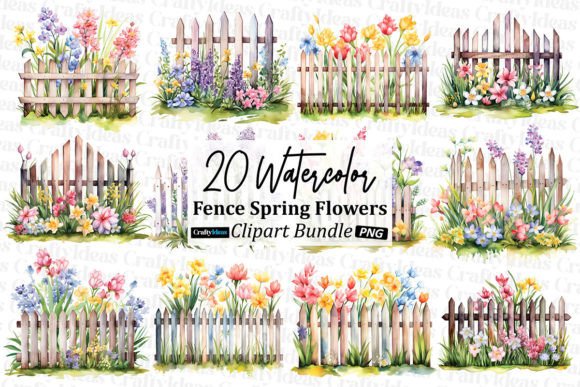
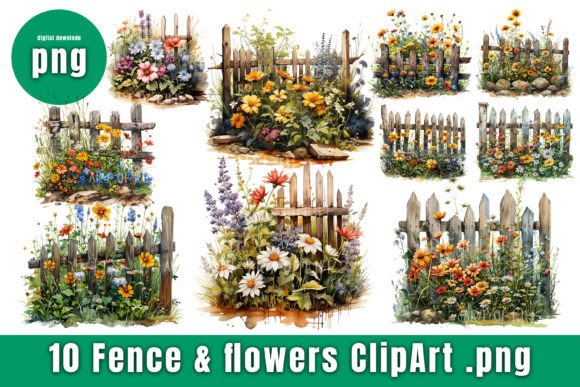
The moment you open the file set, the mood is unmistakable. There is a softness here that screams "spring renewal." The composition features a rustic fence line intertwined with blooming flowers, rendered in a watercolor style that suggests transparency and light. For an embroidery designer, this presents both an opportunity and a challenge. The visual personality is elegant and charming, perfectly suited for boutique branding or high-end personalized gifts. However, watercolor effects rely heavily on gradient blends and soft edges, which are notoriously difficult to replicate with thread.
If you are planning to use this as a direct machine embroidery design, you will need to do some heavy lifting in your digitizing software. The original files are raster images, meaning they are not ready-to-stitch embroidery files out of the box. But if you have the skills to convert this into a fill stitch or applique design, the payoff could be significant. The layout is horizontal, making it ideal for wide placements like the chest of a sweatshirt or the side of a tote bag.
Real-World Application: The Boutique Tote Scenario
Let's walk through a realistic scenario. Imagine a client runs a small flower shop and wants a run of twenty canvas tote bags for their spring market. They want something that feels handmade but professional. This is where the Watercolor Fence Spring Flowers Clipart shines as a reference.
I would not attempt to stitch the watercolor gradients directly; instead, I would use the image as a template for an applique design. By cutting fabric pieces that match the flower colors and the fence tone, you can capture the "watercolor" look through fabric texture rather than thread density. You could layer a light pink fabric over a white base to mimic the paint bleed. This approach reduces stitch density, keeping the tote bag design flexible and comfortable to carry. The result is a handmade product that looks intricate but stitches out cleanly, boosting the perceived value of the item.
Alternatively, for a sweatshirt embroidery project, you might opt for a simplified version. Using long running stitch outlines for the fence and dense satin stitch for the flower centers creates a lovely contrast. This works exceptionally well on fleece or French terry, where the texture of the fabric complements the rustic theme of the fence.
Navigating Technical Challenges
While the aesthetic is strong, we must discuss where caution is required. If you attempt to digitize this directly without simplifying, you risk creating a stiff, puckered mess. Watercolor styles often imply thousands of tiny color changes. In embroidery, this translates to excessive trims and jumps, which ruin the workflow and weaken the fabric texture.
There are specific situations where you should think twice before using a complex adaptation of these Graphics:
- Small Hoop Sizes: The detail level in the flowers may get lost in a 4x4 hoop. The delicate petals could merge into a blob of thread if the stitch density is too high.
- Stretchy Fabrics: Placing a large, dense design on a baby onesie or a stretchy cap is risky. The fence line, being long and horizontal, acts as a barrier that can restrict stretch and cause warping.
- Dark Fabrics: Watercolor relies on light passing through layers. On dark navy or black garments, you will need a substantial underlay or even a white applique base to make the spring colors pop, otherwise, the design will look muddy.
- Frequent Washing: Items like kitchen towels or aprons undergo rigorous washing. Complex, high-density floral clusters may fray faster than simpler designs. For these items, a bold outline style is safer than trying to mimic paint.
Enhancing Brand Value and Customer Trust
Why go through the trouble of adapting clipart for embroidery? Because uniqueness sells. As an Etsy seller or owner of a small shop product line, using common, pre-digitized motifs can make your inventory look generic. By taking the Watercolor Fence Spring Flowers Clipart and interpreting it through your own stitching technique, you create a signature look.
This attention to detail builds customer trust. When a buyer sees that the flowers on their personalized gift have thoughtful shading achieved through fabric selection or careful thread blending, they recognize the effort. It elevates the item from a commodity to a piece of art. For commercial embroidery clients, this level of customization demonstrates professionalism and creative problem-solving, justifying higher price points.
Practical Notes for the Designer
Before you commit to stitching this on a client's garment, here is my checklist for working with this type of imagery:
- Test on Scrap First: Never skip the test stitch. Use the same fabric weight and stabilizer you plan to use for the final job to check for registration issues.
- Check Thread Contrast: Watercolor implies subtle shifts. Ensure your thread colors have enough distinction to be visible once stitched, or the design will look flat.
- Verify Licensing: Since these are sold as clipart and sublimation files, you must confirm the license terms before selling finished embroidered items. Some creators allow personal use only, while others permit commercial application. Always read the fine print.
- Simplify the Details: Don't try to stitch every petal. Group shapes together. Sometimes less is more when translating Illustrations to thread.
- Mockup in Black and White: Convert the image to grayscale on your computer. If you can't distinguish the elements in black and white, the stitch definition will likely fail.
In conclusion, the Watercolor Fence Spring Flowers Clipart is a versatile resource for the creative entrepreneur. While it requires technical adaptation to move from a digital graphic to a physical embroidered patch or garment, the potential for creating unique, high-value items is immense. Whether you are crafting holiday embroidery for home decor or baby embroidery for a boutique, this design offers a charming foundation. Just remember: the magic isn't in the file itself, but in how skillfully you translate its spirit into thread.