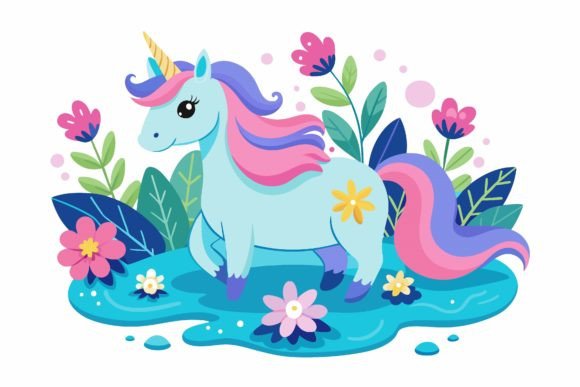
Unicorn with Flowers: A Designer's Review
As a designer who spends more time staring at stitch simulations than actual sunsets, I approach every new machine embroidery design with a healthy dose of skepticism. We've all been there: you download a file that looks magical on the screen, only to find it turns into a bird's nest of thread breaks and puckering once it hits the fabric. That is why I took a close look at the Unicorn with Flowers on a Background design before committing it to any client projects. This isn't just about whether it's cute; it's about whether it holds up under the needle and delivers value to the end user.
My first impression of this Illustrations-style graphic was its whimsical yet balanced composition. The layout features a central unicorn figure surrounded by a lush arrangement of flora, creating a natural frame that draws the eye inward. For an embroidery project, this kind of framing is excellent because it hides potential start and stop points within the dense floral elements. The mood is undeniably cheerful and梦幻 (dreamy), making it an instant fit for nursery decor, children's apparel, or boutique lifestyle products. However, the visual personality of the design suggests it relies heavily on clean color transitions. If your thread colors don't have enough contrast, the definition between the unicorn's mane and the surrounding flowers could get lost, especially on textured fabrics.
Real-World Application: The Tote Bag Test
To truly evaluate this design, I imagined a specific real-life scenario: a custom order for a local boutique needing a limited run of canvas tote bag design items for a spring market. The client wanted something that felt handmade but professional. The Unicorn with Flowers on a Background seemed perfect for this. On a sturdy cotton canvas, the fill stitch areas of the flowers would provide great coverage, while the outline of the unicorn would pop against the neutral background.
In this context, the design shines as a handmade product that elevates a simple bag into a personalized gift or a statement piece. Customers at craft fairs are drawn to items that tell a story, and this graphic tells a story of nature and magic. For an Etsy seller, this type of imagery is gold. It translates well into printable mockup previews, allowing you to show potential buyers exactly how the finished product will look on various items like aprons, pillow covers, or even sweatshirt embroidery. The versatility here is key; it's not just a sticker-looking graphic but a design that integrates well with the texture of the fabric.
Navigating Fabric Challenges and Stitch Density
While the design is beautiful, practical application requires caution. One area where I would advise careful consideration is stitch density. Designs in the Graphics category often aim for a printed look, which can sometimes translate to overly dense stitching in digital files. If you are working on stretchy fabric, like a jersey knit for baby embroidery projects, high density can cause the fabric to pucker or become stiff and uncomfortable against sensitive skin. Before stitching a final custom apparel piece, it is crucial to test the design on scrap fabric of the same weight and stretch.
Furthermore, the background element mentioned in the title needs scrutiny. Is it a solid block of color, or a subtle texture? If it involves a large area of satin stitch or dense fill, it might require a heavy-duty stabilizer to prevent sagging over time. For items that will see frequent washing, like kitchen towels or active wear, a lighter approach or converting parts of the background to a running stitch might be necessary to maintain flexibility. If you are planning to use this on a curved surface, such as a cap, the wide horizontal spread of the floral background might be problematic. In those cases, you may need to edit the embroidery file to remove outer elements to fit a smaller hoop size.
Commercial Viability and Brand Consistency
For those running a craft business, the visual appeal of a design directly impacts customer trust and perceived value. The Unicorn with Flowers on a Background has a polished look that suggests professionalism. When used consistently across a line of products—say, matching tote bags, tea towels, and wall hangings—it helps build strong brand recognition. Buyers engage more deeply with products that feel cohesive and thoughtfully designed.
However, selling finished items or digital assets comes with responsibilities. The product description notes that these are high-quality designs that can be customized, but it does not explicitly detail the license terms regarding commercial resale of the physical stitched item versus the digital file itself. As a professional, I always advise checking the specific licensing agreement before listing items on your small shop product catalog. Additionally, since the description mentions the designs come in "several file forma" (formats), ensure you have the correct format for your specific machine to avoid conversion errors that could ruin stitch quality.
Final Verdict for Designers and Makers
Ultimately, the Unicorn with Flowers on a Background is a strong contender for anyone looking to add a touch of fantasy to their commercial embroidery lineup. Its strength lies in its adaptable theme, suitable for everything from holiday embroidery gifts to everyday boutique merchandise. To get the best results, treat it as a flexible asset rather than a rigid template. Test it on both light and dark fabrics to see how the thread color contrast holds up. Consider simplifying the background if you are working with limited hoop space or delicate materials.
If you are an appliqué design enthusiast, you might even consider adapting sections of this graphic, using fabric pieces for the flower petals to reduce stitch count and add texture. Whether you are creating a one-off embroidered patch for a friend or scaling up production for a seasonal launch, this design offers a solid foundation. Just remember: the difference between a good design and a great finished product often lies in the preparation. Check your tension, choose your stabilizer wisely, and let the charm of the unicorn do the rest.